The Ultimate Guide to Freeze Drying Equipment: Preserving Perfection
Wiki Article
In a world increasingly devoted to sustainability, nutrition, and long-term food storage, unique process has emerged through the realms of laboratory science and astronaut meals in to the mainstream. At the heart with this revolutionary preservation method lies a complicated piece of technology: the freeze dryer. But exactly what is this equipment, and the way does it transform fresh, perishable items into lightweight, shelf-stable treasures?
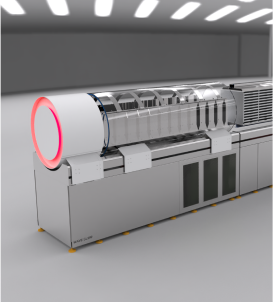
This article delves to the world of freeze drying equipments, exploring its core components, how it operates, and also the different types readily available for everything from home kitchens to industrial production.
What is Freeze Drying? A Quick Primer
Before knowing the equipment, you need to grasp the method. Freeze drying, scientifically known as lyophilization, is really a dehydration method that works by freezing something and then decreasing the surrounding pressure to permit the frozen water within the material to transition from a solid to some gas (a process called sublimation).
The result? A product that retains its original shape, color, nutritional value, and flavor almost perfectly, with 98-99% of its moisture removed. Simply add water, and yes it rehydrates to your state remarkably all-around its fresh form.
The Core Components of a Freeze Dryer
While designs vary by size and sophistication, all freeze dryers share four fundamental components that work in concert to try and do the lyophilization process.
1. The Chamber
This will be the "workspace" in the freeze dryer where the product is placed. It's a robust, vacuum-tight enclosure, often manufactured from stainless steel, built to withstand significant pressure differences. Inside, you can find shelves, which in advanced models are temperature-controlled. The chamber's door is equipped with a strong seal, similar to an industrial-grade pressure cooker, to keep the critical vacuum.
2. The Freezing System
Sublimation is only able to occur if your product's water is thoroughly frozen. The freeze dryer achieves this a single of two ways:
Shelf Refrigeration: The most common method, where the shelves themselves are cooled, often to temperatures as low as -40° to -50°C (-40° to -58°F). This conducts cold directly in to the product trays.
External Freezer: Some systems need a separate, pre-freezing step in which the product is frozen in the standard freezer before being loaded in to the chamber.
3. The Vacuum Pump
This is the engine with the entire operation. Once the technique is frozen, the vacuum pump dramatically lowers mid-air pressure inside the chamber. This pressure drop is the thing that enables the frozen ice crystals to sublimate, bypassing the liquid phase entirely. Without a robust and reliable vacuum pump, the method simply wouldn't work.
4. The Condenser
As water vapor sublimes from your product, it requires to be captured and re-frozen; otherwise, it will simply re-condense elsewhere. The condenser is an extremely cold coil (even colder than the product shelves, typically -60°C or below) that acts as a "cold trap." The water vapor travels through the chamber for the condenser, where it instantly re-freezes as ice. This protects the vacuum pump from moisture and completes the dehydration process. At the end with the cycle, this ice can burn during a defrost phase.
How the Equipment Works: A Step-by-Step Process
Loading & Freezing: The prepared strategy is spread onto trays and loaded in the chamber. The freeze dryer's freezing system rapidly lowers the temperature, solidifying the river content.
Vacuum Activation: The vacuum pump is engaged, sucking the air out in the chamber to make a near-perfect vacuum.
Primary Drying (Sublimation): With the vacuum established, the shelf temperatures are slightly raised, providing sufficient energy for that frozen water to sublimate. This is the longest phase in the cycle, often taking several hours or even days, depending on the product's thickness and water content. The water vapor flows on the condenser and turns to ice.
Secondary Drying (Desorption): After most in the free water is fully gone, a tiny bit of bound moisture remains. In this final phase, the shelf temperature is increased further (though still well below room temperature) to get rid of the molecular bonds and take off this residual water, ensuring maximum life expectancy.
Completion & Unloading: The vacuum is slowly released, the chamber is opened, and also the perfectly preserved, freeze-dried method is removed, ready for packaging.
Types of Freeze Drying Equipment
Freeze dryers are certainly not one-size-fits-all. They are categorized according to their scale and application.
Laboratory Scale: Used for research, pharmaceuticals, and biotechnology. These units prioritize precision, data logging, along with the ability to process small, sensitive samples. They often feature sophisticated programmable controls and therefore are built for repeatability.
Pilot Scale: A middle-ground option useful for process development and small-batch production. Companies rely on them to scale up a recipe from the lab to full production without wasting resources.
Industrial Scale: These are the giants with the industry. Used for large-scale food production, pharmaceutical manufacturing, and preservation of historical artifacts. They feature massive chambers, automated loading/unloading systems, and they are designed for continuous, high-volume output.
Home/Consumer Grade: A growing market, these compact units bring freeze drying to the household. Brands like Harvest Right have popularized this category, allowing families to preserve garden harvests, create emergency food supplies, to make lightweight snacks for camping and hiking.
Key Considerations When Choosing Equipment
Whether for any business or possibly a home, choosing the proper freeze dryer involves several factors:
Capacity: Measured by the tray floor or volume. How much are you looking to process per batch?
Shelf Temperature Range: A wider range offers more versatility for various products.
Condenser Capacity: Determines simply how much moisture the device can remove before having to defrost.
Pump Quality: The vacuum pump is important for performance and longevity. Oil-based pumps are powerful but require maintenance; oil-free pumps are cleaner but could be less robust.
Ease of Use & Control: From simple buttons to full-color touchscreens with pre-programmed cycles.
Conclusion: More Than Just a Machine
Freeze drying equipment can be a gateway to a new amount of preservation. It’s a technology that locks in summer's berry harvest for a winter smoothie, ensures a life-saving vaccine remains stable throughout the world, and allows an explorer to handle a gourmet meal in their backpack. By comprehending the intricate dance between its chamber, freezer, vacuum pump, and condenser, we can easily appreciate this remarkable equipment not simply as an appliance, but being a tool for building a more resilient, efficient, and flavorful future.